Motor control circuits
Seal-in Circuit (Continuous Running of an Induction Motor)
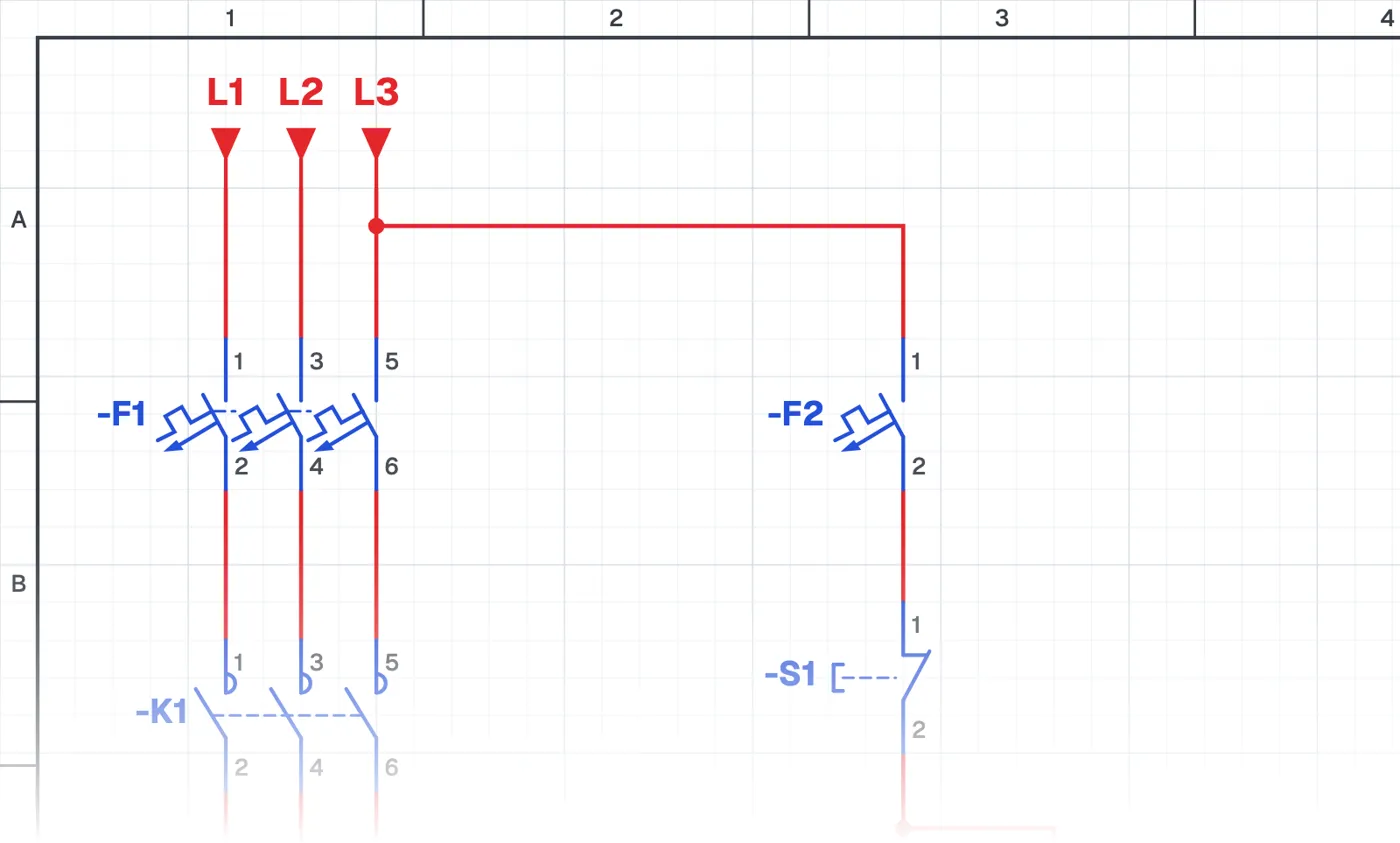
What is a seal-in circuit?
A seal-in circuit keeps the motor running after the start button is pressed once, until the stop button is pressed. The contactor stays energized after the button is released thanks to its own auxiliary contact. It is also known as a self-holding or latching circuit.
Where is a seal-in circuit used?
Almost every motor control circuit in industry has a seal-in: pumps, fans, conveyors, compressors, machine tools and production machines. In PLC-based automation the same logic is built inside the program. It is the basic circuit everyone learning motor control must know.
Power circuit and control circuit
The power circuit has a circuit breaker, contactor, overload relay and motor. The control circuit has the stop button, start button, overload contact and contactor coil, plus the seal-in contact. Where the seal-in contact sits in the circuit decides the whole behaviour; the book and the app show its role in detail.
Why use a seal-in circuit?
When power fails and returns, the contactor has already de-energized, so the motor does not restart by itself; the operator must press start again. This prevents a machine from starting unexpectedly and hurting someone. When the overload relay trips, the motor also stops and does not restart on its own.
Parts used
- Motor 3~
- M1
Run it in the simulator.
This circuit is ready in the CoilPath library. Open it, press the buttons and follow the current. It also comes with a wiring view and a panel layout.
Related circuits
- Seal-in Circuit (Continuous Running of an Induction Motor with a Relay)
- Jog Button with Momentary Running and Seal-in Cancel Circuit
- Seal-in Circuit with Start–Stop Control from Three Locations
- Forward–Reverse Direct-On-Line Starting Circuit
- Sequential Induction Motor Starting with Timer Relays
- Delayed Stop Circuit with a Timer Relay