Motor control circuits
Seal-in Circuit (Continuous Running of an Induction Motor with a Relay)
What is a seal-in circuit with a relay?
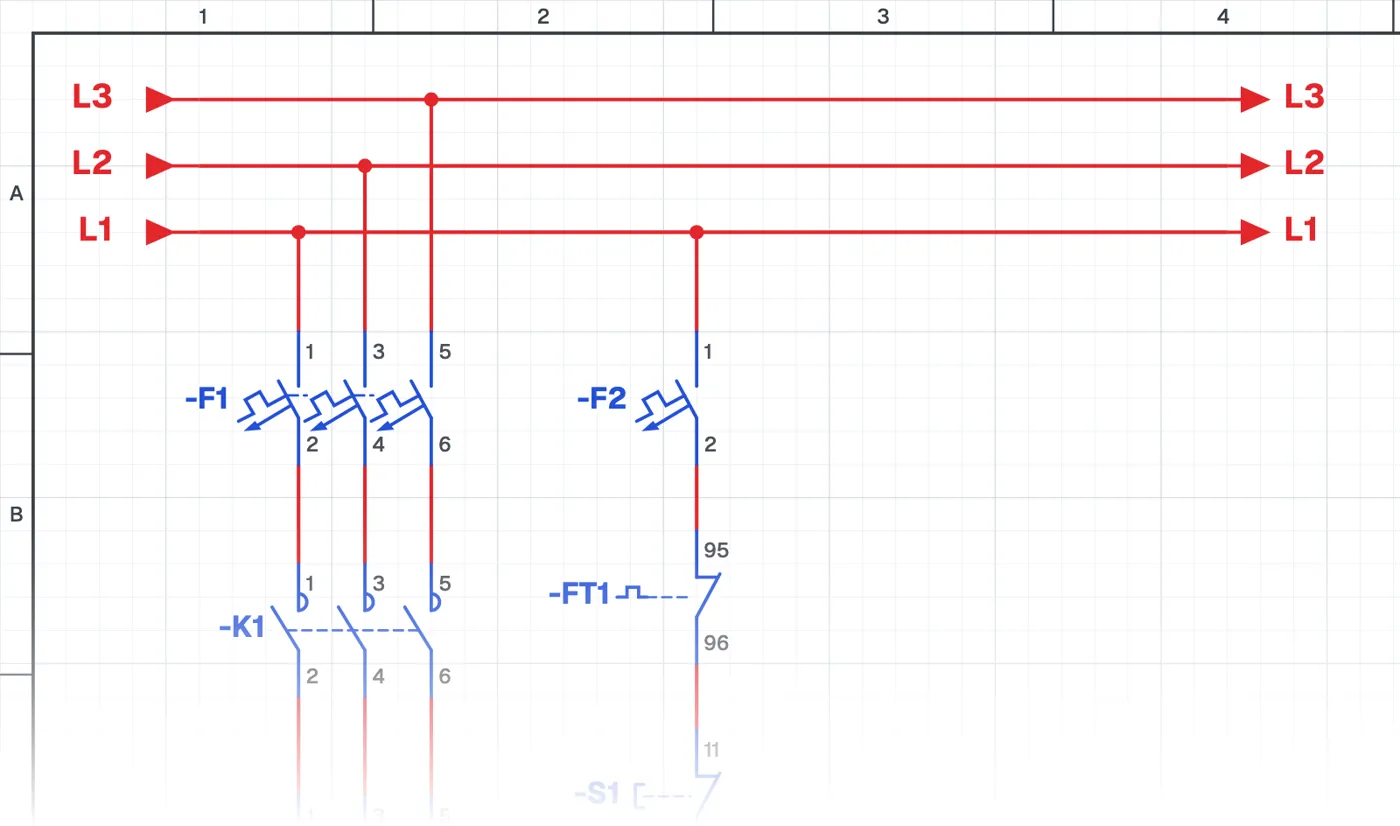
In this control circuit the seal-in is done with an auxiliary (control) relay instead of the contactor's auxiliary contact. The relay seals itself in and energizes the contactor with its own contact. The circuit also has a jog button for inching.
Where is an auxiliary relay used?
An auxiliary relay is used when the contactor has too few auxiliary contacts, when the control circuit runs at a different voltage from the contactor coil, when the small contact of a sensor or PLC output must energize a large contactor, and when one command must do several jobs. Relay groups are very common in large control and automation panels.
Power circuit and control circuit
The power circuit is the same as direct-on-line starting. In the control circuit the auxiliary relay, contactor, start, stop and jog buttons work together. Relay socket numbers differ from contactor terminals; reading relay sockets and wiring the right terminal is one of the most common sources of mistakes on site.
What to watch out for
The relay coil voltage must match the control voltage, and the relay contact rating must cover the current drawn by the contactor coil it supplies. Check the pin numbers against the schematic when mounting the relay in its socket.
Parts used
- Motor 3~
- M1
- Start button (NO)
- S2, S3
- Contactor coil
- KA, K1
Run it in the simulator.
This circuit is ready in the CoilPath library. Open it, press the buttons and follow the current. It also comes with a wiring view and a panel layout.
Related circuits
- Jog Button with Momentary Running and Seal-in Cancel Circuit
- Seal-in Circuit with Start–Stop Control from Three Locations
- Forward–Reverse Direct-On-Line Starting Circuit
- Sequential Induction Motor Starting with Timer Relays
- Delayed Stop Circuit with a Timer Relay
- Sequential Induction Motor Starting and Delayed Stop with Timer Relays