PLC circuits
Start-Stop (Seal-in) with a PLC
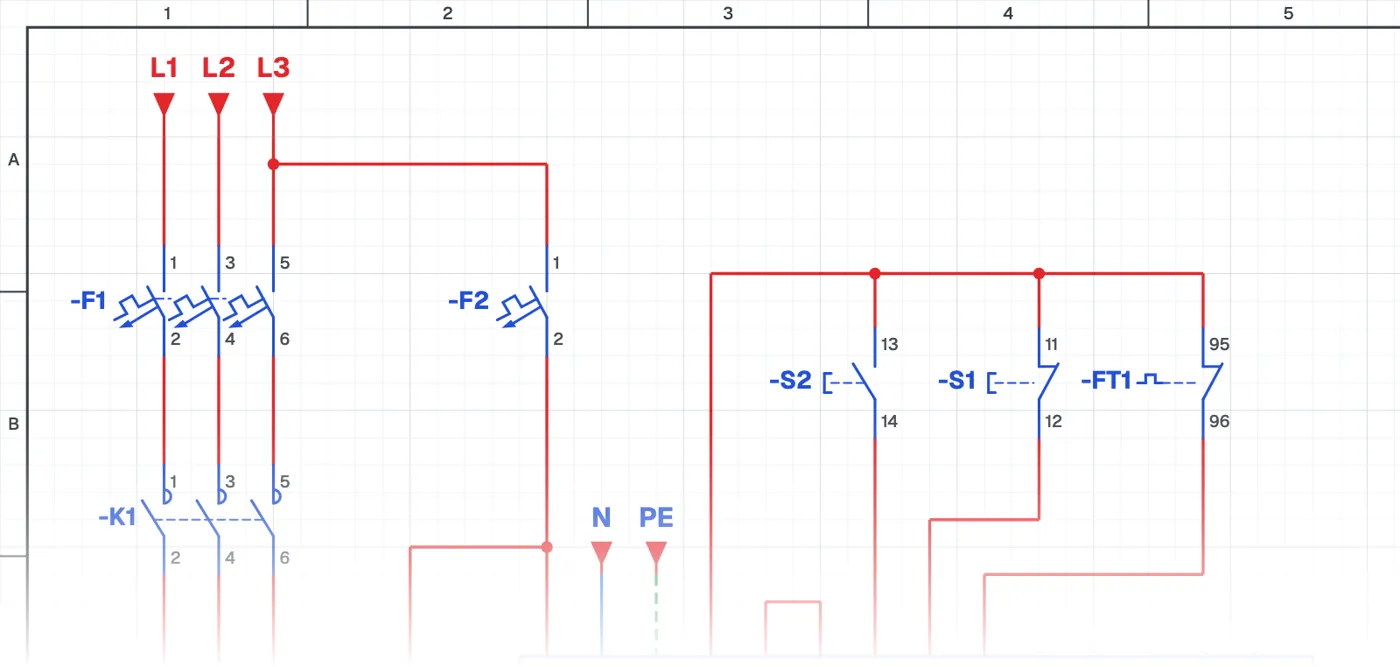
What is start-stop (seal-in) with a PLC?
It is the classic seal-in circuit built with a PLC (programmable logic controller). The start and stop buttons and the overload contact are wired to PLC inputs, the contactor coil to a PLC output. The seal-in is done in the ladder program, not with wiring.
Why use a PLC?
In control circuits built with contactors and relays, every change means rewiring. With a PLC the logic lives in the program; changes are made from a computer without touching the panel. That is why almost all machines and automation systems in factories are controlled by PLCs.
PLC wiring and ladder program
The power circuit is the same as a classic direct-on-line starter: circuit breaker, contactor, overload relay and motor. On the control side the buttons and overload contact go to PLC input terminals, the contactor coil and fault lamp to PLC outputs. Wiring the stop button and overload as normally closed (NC) contacts and writing the program accordingly is what confuses people most when moving to PLCs.
From relay logic to PLC
For someone who knows control circuits, the easiest way to learn PLCs is to rebuild familiar circuits with a PLC. The seal-in circuit is the first step on that path, and the ladder diagram was designed to look like a control schematic in the first place.
Parts used
Run it in the simulator.
This circuit is ready in the CoilPath library. Open it, press the buttons and follow the current. It also comes with a wiring view and a panel layout.