PLC circuits
Tank Filling and Emptying with a PLC
What is tank filling and emptying with a PLC?
It is an application in which a tank is watched by lower and upper level sensors and filled and emptied automatically by a PLC. A pump fills it and a solenoid valve empties it.
Where is it used?
It is used in water treatment plants, food and chemical processes, boiler feed systems and filling machines. Level control is one of the most basic tasks of process automation.
PLC wiring and ladder program
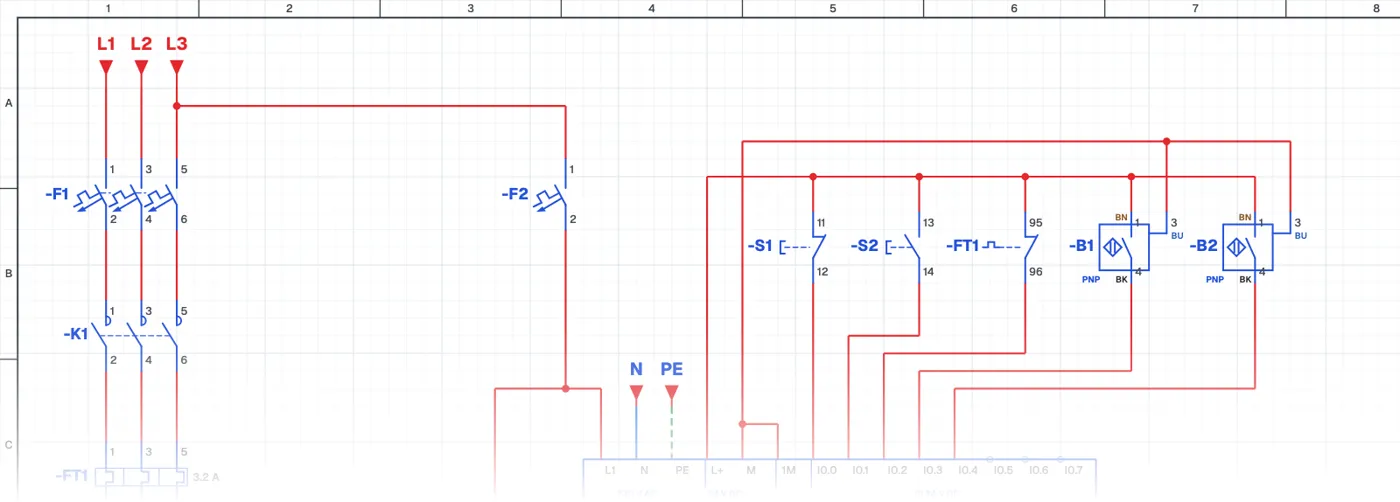
The pump motor runs through a contactor and overload relay, the solenoid valve directly from a PLC output. Capacitive level sensors go to PLC inputs. The program shows how the pump and valve are managed relative to each other and how the two outputs are kept from running at the same time.
What to watch out for
The sensitivity of capacitive sensors is set for the liquid and the tank material. Extra safety measures are considered so the tank does not overflow if the valve or pump fails.
Parts used
- Motor 3~
- M1
- PLC
- PLC1
- Sensor (3-wire)
- B1, B2
Run it in the simulator.
This circuit is ready in the CoilPath library. Open it, press the buttons and follow the current. It also comes with a wiring view and a panel layout.