Solenoid valve
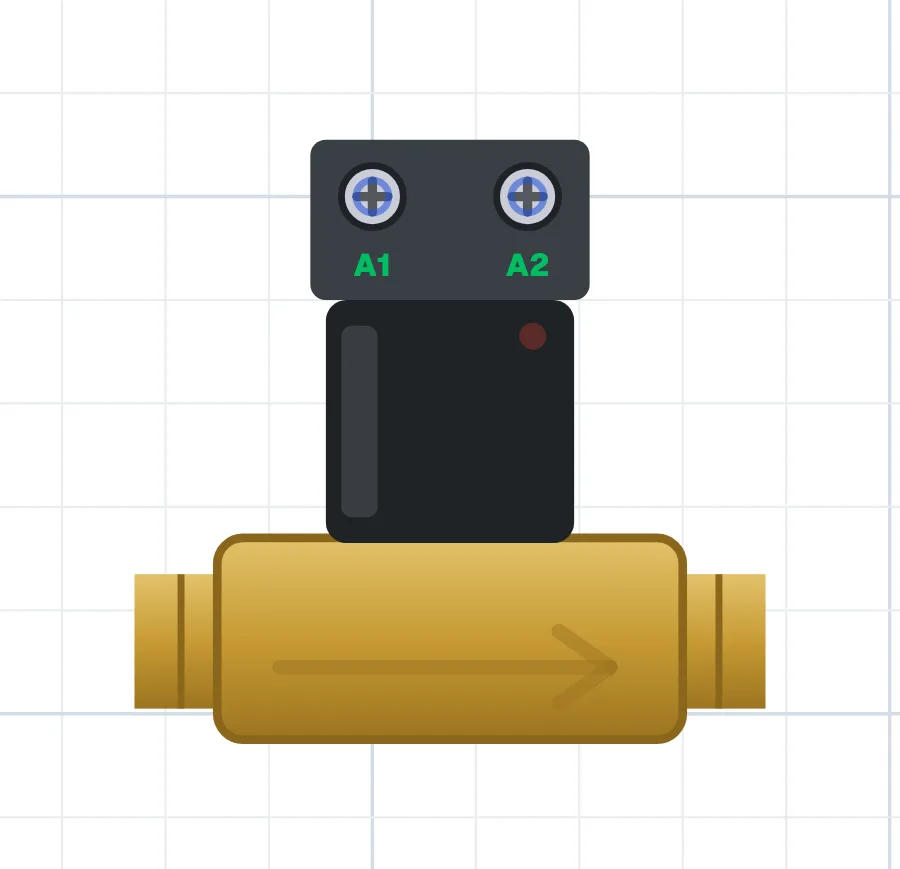
What is a solenoid valve?
A solenoid valve is an electrically operated valve that opens or closes when voltage reaches its coil. The magnetic field created when the coil is energized moves the plunger inside the valve.
Where is a solenoid valve used?
It is used to fill and empty water tanks, in irrigation systems, boiler and heating installations, air and gas lines, washing machines and dishwashers, pneumatic systems and process automation. It can be opened and closed automatically by a PLC or timer relay.
Types and selection
Normally closed (NC) valves open when energized; normally open (NO) valves close when energized. They are chosen by coil voltage (24 V DC, 230 V AC and so on), connection size, operating pressure and type of medium. Pneumatic systems use 3/2 and 5/2 directional valves.
What to watch out for
The valve is installed according to the flow arrow on its body. Some valves need a minimum pressure difference to work; for low-pressure systems choose a direct-acting valve. The coil voltage must match the control voltage; for valves that stay energized continuously, consider coil heating.
Terminals
Solenoid valve
- Coil
- A1-A2
Try it in the simulator.
This component is in CoilPath with its real look. Add it to a circuit, wire it and see how it behaves in the simulation.