Pump and level control
Automatic Pump Operation with an Upper-Level Float Switch
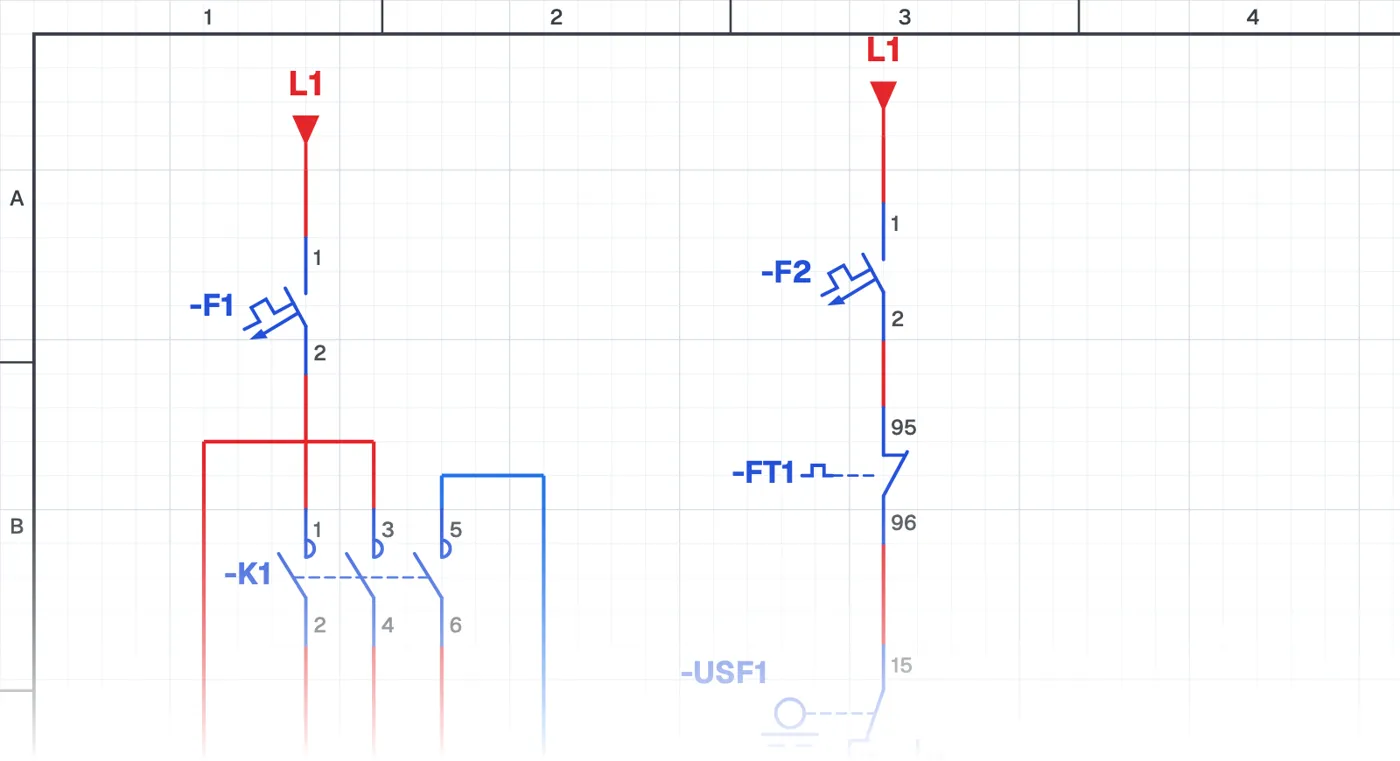
What is a pump circuit with an upper-level float switch?
In this control circuit the pump starts and stops by itself, without buttons, with a float switch placed at the upper level of the tank. As the tank empties the float changes position and the pump runs; when the tank is full the pump stops. The tank is kept full without an operator.
Where is it used?
It is used in water tanks, roof and building tanks, booster tanks, livestock watering tanks and irrigation ponds. It is the simplest and cheapest way to fill a tank automatically.
Power circuit and control circuit
In the power circuit a single-phase pump motor is supplied through a circuit breaker, a contactor and an overload relay. In the control circuit the float switch contact controls the contactor coil, and the overload contact cuts the control circuit on overload. Which contact of the float switch is used decides whether the pump fills or empties.
How to choose a float switch
The float cable length is set to the tank's working range. The contact is chosen to supply the contactor coil, not the motor directly, which gives the float switch contact a long life. For drinking water, the float switch must be made of suitable material.
Parts used
- Circuit breaker (1-pole)
- F1, F2
- Float switch
- USF1
Run it in the simulator.
This circuit is ready in the CoilPath library. Open it, press the buttons and follow the current. It also comes with a wiring view and a panel layout.
Related circuits
- Automatic Pump Operation with a Lower-Level Float Switch
- Automatic Tank Filling Control with Lower and Upper Float Switches
- Manual and Automatic Pump Operation
- Manual Pump Operation with Self-Holding and Automatic Operation by Float Switch
- Running One of Two Pumps with a Selector Switch
- Two-Pump Level Control Circuit with Selector Switch and Phase Monitoring Relay