Single-phase motor
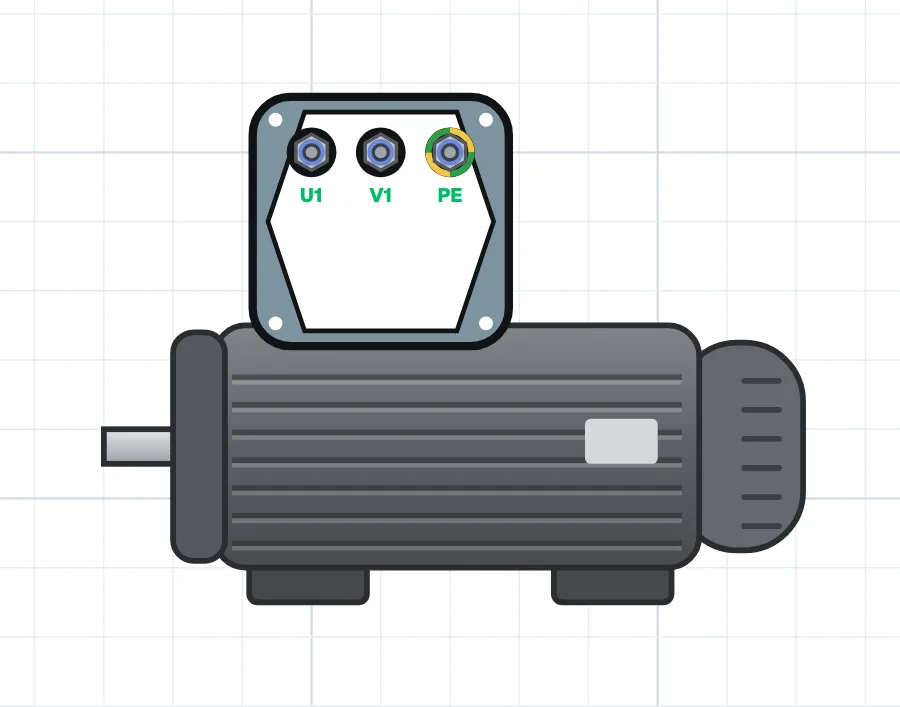
What is a single-phase motor?
A single-phase motor is an induction motor that runs on phase and neutral (a single-phase supply). Because a single-phase supply does not create a rotating magnetic field, these motors have an auxiliary winding and usually a capacitor that let them start.
Where is a single-phase motor used?
It is used in household and small water pumps, booster pumps, fans, compressors, concrete mixers, small workshop machines and wherever no three-phase supply is available.
Types
There are permanent split capacitor, capacitor start and capacitor start-capacitor run types. Their power is usually limited to a few kW. They are started and protected with a contactor, overload relay or motor protection circuit breaker.
What to watch out for
The capacitor value must match the motor nameplate; a faulty capacitor stops the motor from starting or makes it overheat. The motor frame is earthed. Overcurrent protection is set to the nameplate current, as with three-phase motors.
Terminals
Single-phase motor
- Phase
- Neutral
- Protective earth
Try it in the simulator.
This component is in CoilPath with its real look. Add it to a circuit, wire it and see how it behaves in the simulation.
Circuits that use this component
- Automatic Pump Operation with an Upper-Level Float Switch
- Automatic Pump Operation with a Lower-Level Float Switch
- Automatic Tank Filling Control with Lower and Upper Float Switches
- Manual and Automatic Pump Operation
- Manual Pump Operation with Self-Holding and Automatic Operation by Float Switch
- Running One of Two Pumps with a Selector Switch
- Liquid Level Relay – NO Contact Circuit Application
- Liquid Level Relay – NC Contact Circuit Application
- Single-Phase Motor with Three Switches