Solar PV
Rooftop PV with Two MPPTs
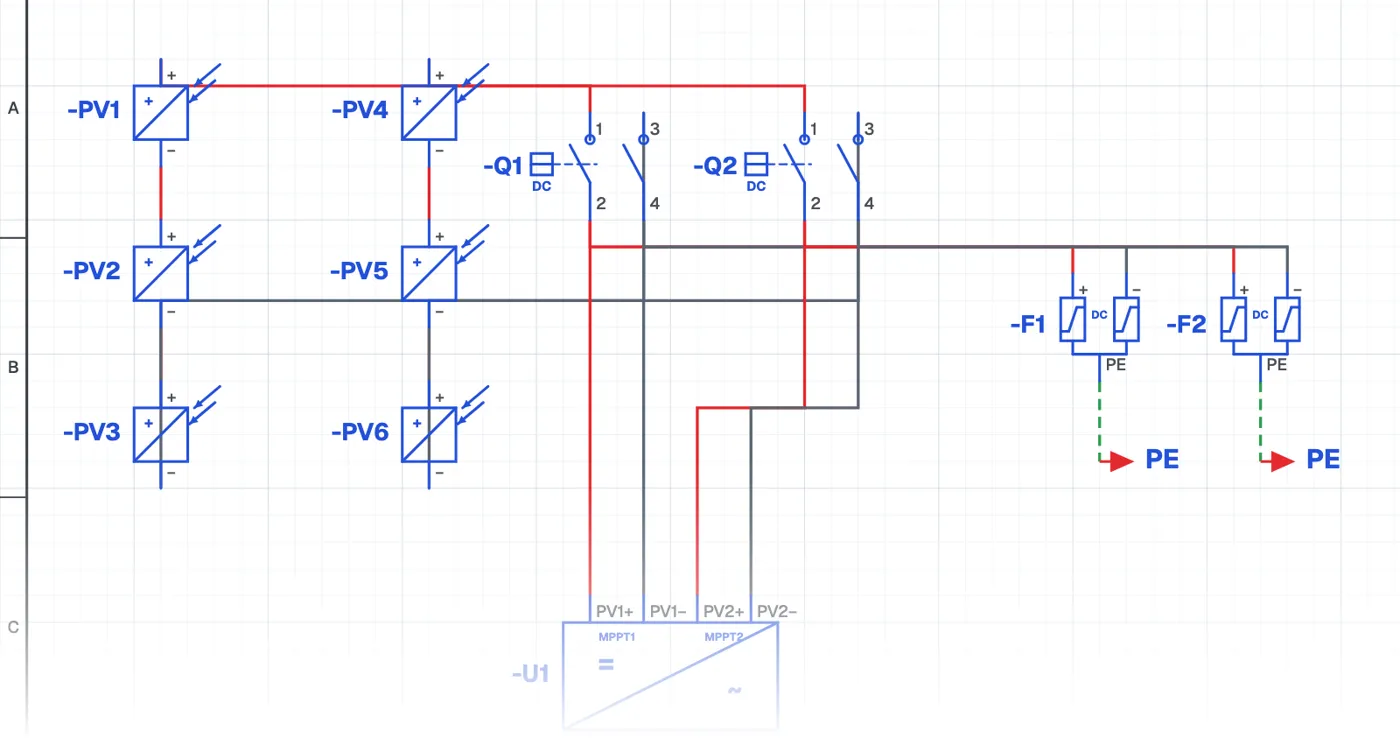
What is an inverter with two MPPTs?
An MPPT (maximum power point tracker) is an inverter input that constantly searches for the voltage and current at which the panels work best. In an inverter with two MPPTs, two panel strings are tracked independently. In this application the two strings, each with its own DC isolator and surge protector, are connected to the inverter's two MPPT inputs.
Where is it used?
It is used on roof surfaces facing different directions (east and west, for example), on areas shaded at different times and with strings of different panel counts. If one string is shaded or disconnected, the other keeps producing.
DC side and AC side
Each string has its own DC isolator and DC surge protector, so the strings can be disconnected independently during maintenance. The AC side is the same as in the single-string system: the inverter output is connected to the grid through a circuit breaker and a bidirectional meter.
The benefit
When panels in different conditions share one MPPT, the weakest panel drags down the whole string. When the strings are on separate MPPTs, each works at its own best point and the total yield rises.
Parts used
- Solar panel (PV)
- PV1, PV2, PV3, PV4, PV5, PV6
- DC isolator
- Q1, Q2
- DC surge protector
- F1, F2
Run it in the simulator.
This circuit is ready in the CoilPath library. Open it, press the buttons and follow the current. It also comes with a wiring view and a panel layout.