Solar panel (PV)
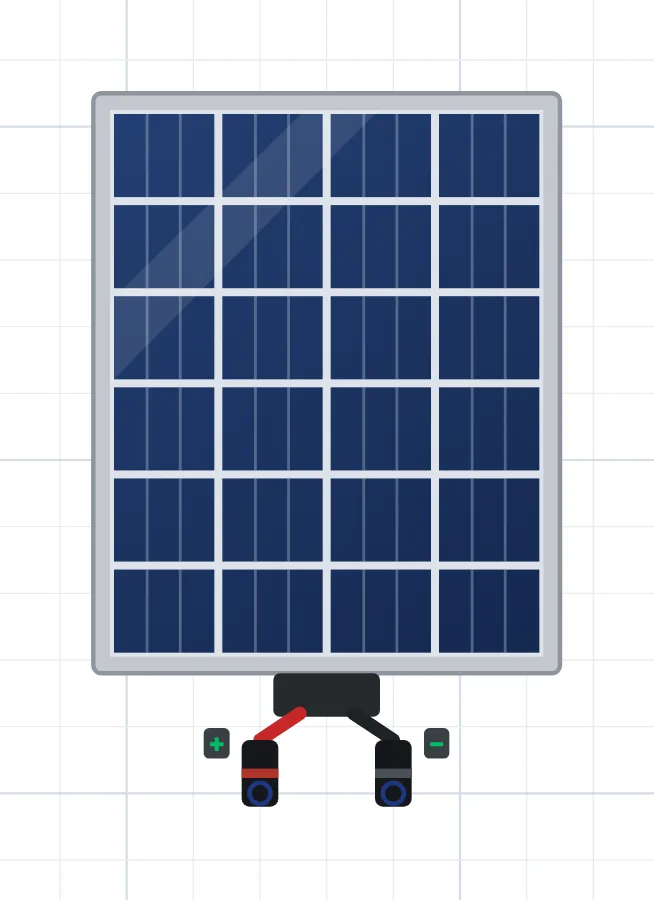
What is a solar panel?
A solar panel (photovoltaic panel, PV module) is made of cells that convert sunlight directly into DC electricity. The power it produces depends on irradiance and cell temperature: more light means more current, higher temperature means lower voltage.
Where are solar panels used?
They are used in rooftop and ground-mounted solar power plants, for electricity generation at homes and businesses, in agricultural irrigation, in off-grid systems, and on caravans and boats.
Series and parallel connection
When panels are connected in series their voltages add up and the current stays the same; a group of panels in series is called a string. In parallel their currents add up and the voltage stays the same. The number of panels in a string is set by the inverter's input voltage range. The panel label shows Voc (open-circuit voltage), Isc (short-circuit current), Vmp and Imp.
What to watch out for
The string's open-circuit voltage in cold weather must not exceed the inverter's maximum input voltage. Panels in the same string should be the same model and orientation; shading lowers the output of the whole string. Panel frames are earthed and DC cables and connectors are rated for solar use.
Terminals
Solar panel (PV)
- + lead (red cable)
- − lead (black cable)
Try it in the simulator.
This component is in CoilPath with its real look. Add it to a circuit, wire it and see how it behaves in the simulation.