Solar PV
Rooftop PV, Single String
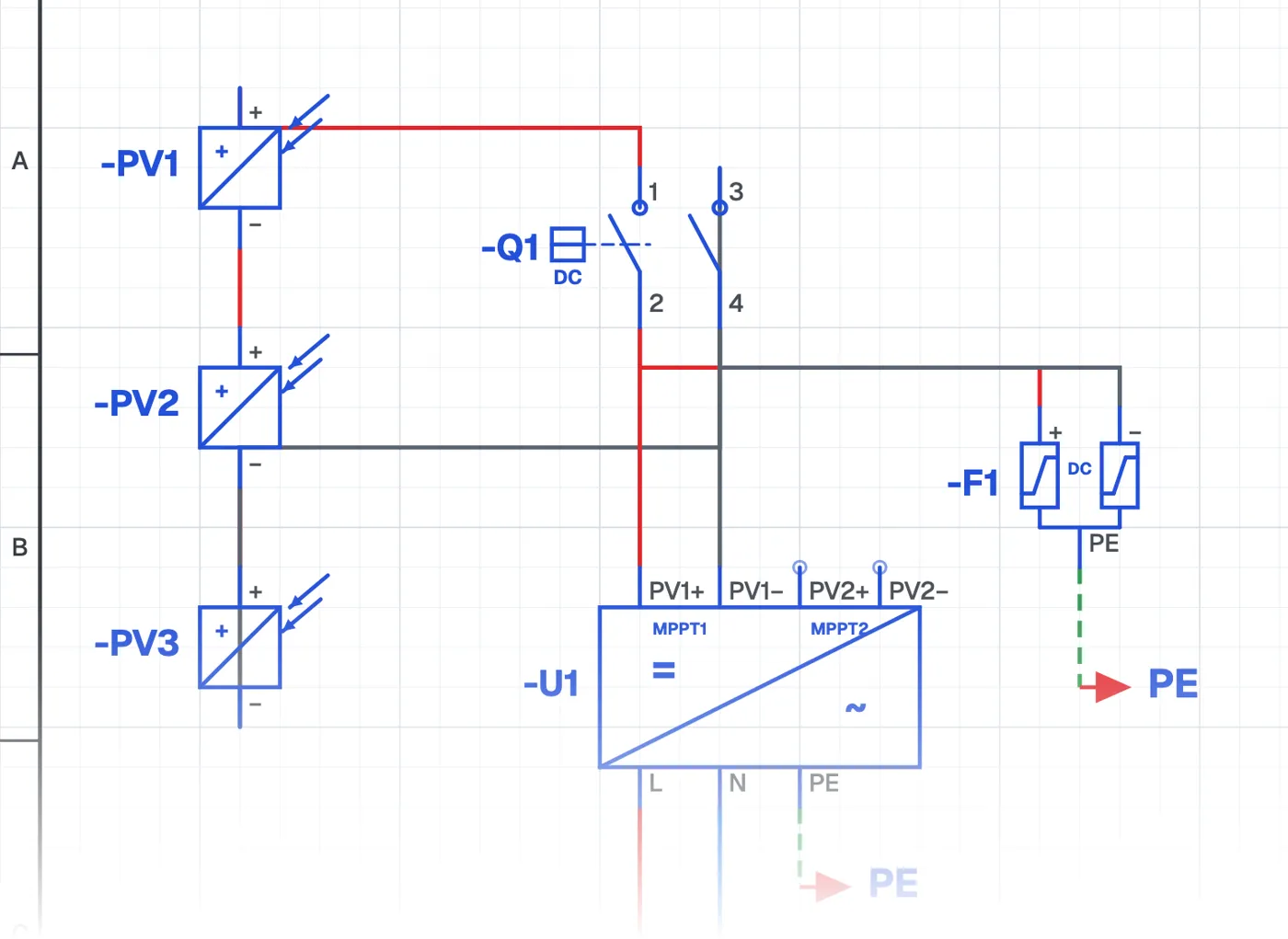
What is a rooftop solar PV system?
A rooftop PV system is a solar power plant installed on a building's roof that feeds the electricity it produces into the grid. Solar panels produce DC power; the inverter converts it into AC power compatible with the grid. This application is the most basic grid-tied PV circuit, with the panels connected in series as a single string.
Where is rooftop solar used?
It is used on homes, offices, factory and warehouse roofs, farms and barns. The electricity produced is used in the building first and the surplus goes to the grid through a bidirectional meter. It is one of the most common ways to cut the electricity bill.
DC side and AC side
On the DC side the panels are connected in series to form a string; in series the voltages add up and the current stays the same. The string is connected through a DC isolator to the inverter's MPPT input, and a DC surge protector guards the line against overvoltage. On the AC side the inverter output is connected to the grid through a circuit breaker and a bidirectional meter, with an AC surge protector protecting the installation.
What to watch out for
The string's open-circuit voltage in the coldest weather must not exceed the inverter's maximum input voltage. DC cables and connectors must be rated for solar use and the DC isolator should be near the inverter. Earthing and surge protection are done according to the regulations against lightning.
Parts used
- Solar panel (PV)
- PV1, PV2, PV3
Run it in the simulator.
This circuit is ready in the CoilPath library. Open it, press the buttons and follow the current. It also comes with a wiring view and a panel layout.