Grid-tied inverter (on-grid)
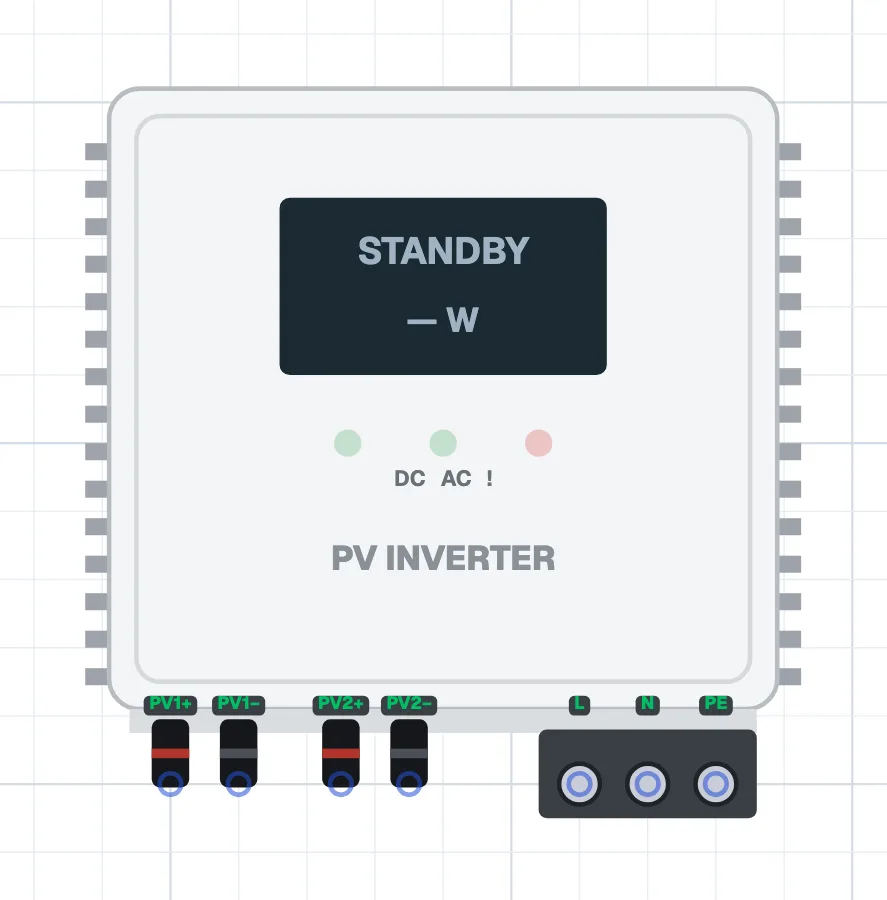
What is a grid-tied inverter?
A grid-tied inverter (on-grid inverter, solar inverter) converts the DC from solar panels into AC at the same voltage and frequency as the grid and feeds it to the building and the grid. For safety, it stops producing when the grid is down.
Where is an inverter used?
It is used in rooftop and ground-mounted solar plants and in the PV systems of homes, businesses, factories and farms. The electricity produced is used on site first and the surplus goes to the grid through a bidirectional meter.
MPPT and selection
The inverter's inputs have an MPPT (maximum power point tracker) that constantly searches for the point of maximum power from the panels. On inverters with several MPPTs, strings facing different directions or shaded differently go to separate inputs. Inverters are chosen by power, single- or three-phase output, number of MPPTs and input voltage range.
What to watch out for
String voltages must be within the MPPT range and below the maximum input voltage. Isolators, fuses and surge protectors are used on both the DC and AC sides. Mount the inverter in a well-ventilated place; in high heat it reduces its output.
Terminals
Inverter (grid-tied)
- MPPT1
- PV1+, PV1−
- MPPT2
- PV2+, PV2−
- Grid
- L, N, PE
Try it in the simulator.
This component is in CoilPath with its real look. Add it to a circuit, wire it and see how it behaves in the simulation.