Motor control circuits
Contactor Connection with a Phase-Neutral Coil
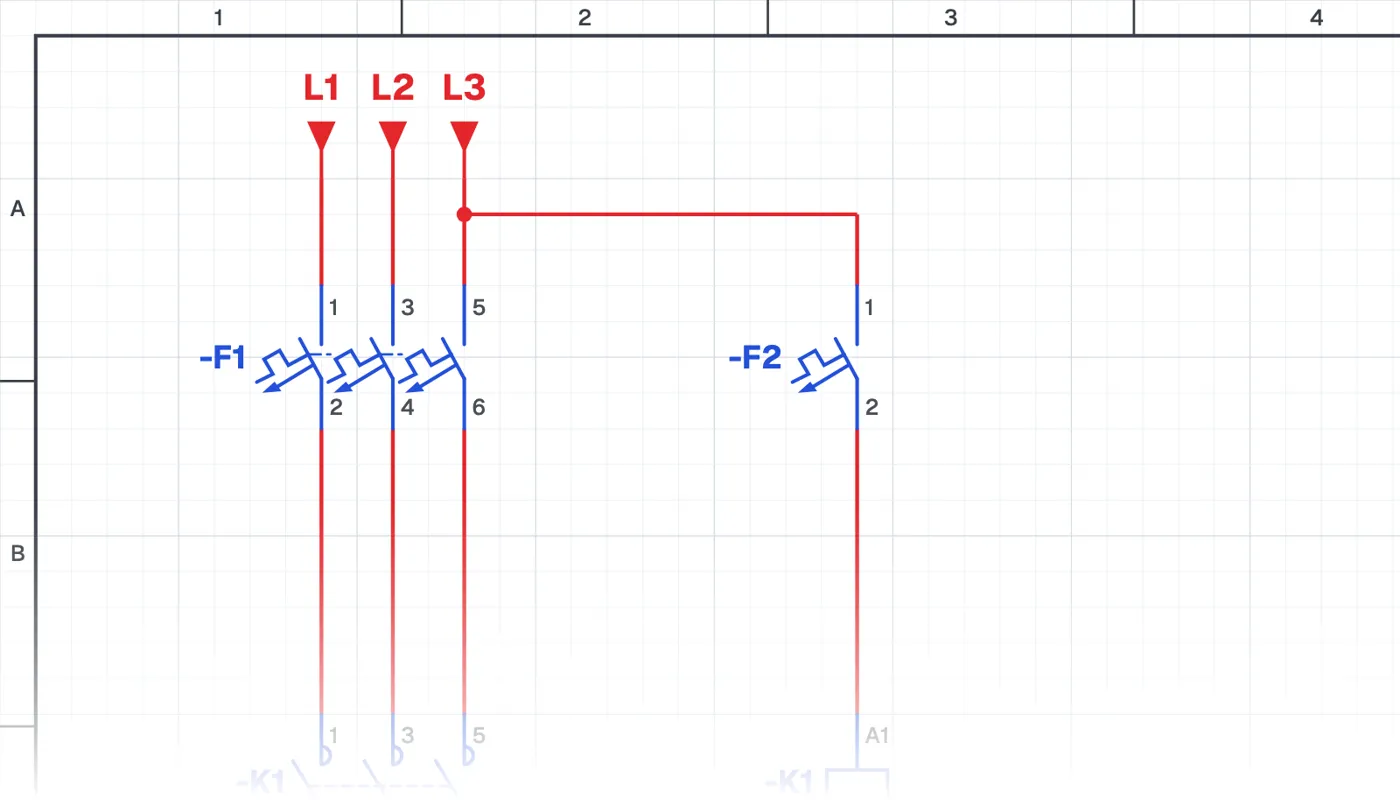
What is a phase-neutral contactor coil?
One end of the contactor coil is connected to a phase and the other to neutral, so the coil works at phase-to-neutral voltage. This is the coil connection seen most often on site, and most contactors are sold with a coil for this voltage.
Where is it used?
In any installation where neutral is brought to the panel, the control circuit is usually built with one phase and neutral: building pump panels, ventilation panels, small industrial machines and irrigation panels. Supplying the control circuit through a single circuit breaker makes both wiring and troubleshooting easier.
Power circuit and control circuit
The motor is supplied with three phases in the power circuit; the control circuit takes one of these phases and neutral. The control circuit has its own circuit breaker, so a short circuit in the control wiring does not trip the motor's main breaker. All buttons, contacts and indicator lamps sit between this phase and neutral.
What to watch out for
When buying a contactor, check that the coil voltage matches the phase-to-neutral voltage. At the wrong voltage the coil either does not pull in or burns out. A sound neutral is also important: if the neutral breaks, the contactor de-energizes and the motor stops.
Parts used
- Motor 3~
- M1
Run it in the simulator.
This circuit is ready in the CoilPath library. Open it, press the buttons and follow the current. It also comes with a wiring view and a panel layout.
Related circuits
- Contactor Connection with a Phase-to-Phase Coil
- Direct-On-Line Starting Circuit for an Induction Motor
- Induction Motor Jog (Inching) Circuit
- Seal-in Circuit (Continuous Running of an Induction Motor)
- Seal-in Circuit (Continuous Running of an Induction Motor with a Relay)
- Jog Button with Momentary Running and Seal-in Cancel Circuit